


Routine lubrication of springs, rollers, and hinges every three months prevents friction-related wear. Monthly inspection of weatherstripping and auto-reverse safety features ensures proper function. Professional service from Overhead Door Company of The Desert™ addresses alignment issues before they cause system failure, extending operational lifespan significantly.
Key Takeaways
Lubricating springs, rollers, and hinges every three months prevents friction-related wear.
Monthly testing of the auto-reverse function ensures the door reverses on obstruction.
Annual professional inspections catch loose hardware, worn springs, and misaligned tracks.
Tightening visible hardware like brackets, bolts, and screws prevents loosening from daily vibration.
Routine, proactive maintenance keeps a garage door in peak condition. This approach prevents costly repairs and premature breakdowns. A properly working garage door allows smooth access to homes and businesses while helping protect vehicles, equipment, and other valuable belongings. When garage doors malfunction, safety hazards emerge. Daily routines suffer disruption. The property’s appearance also declines.
Professional maintenance and repair services prevent these issues while keeping every component operating safely and efficiently year-round. Overhead Door Company of The Desert™ provides the expertise Coachella Valley homeowners need to protect their investment.
How Often Should a Garage Door Be Professionally Inspected?
Annual professional inspections catch wear before components fail. Technicians identify loose hardware, worn springs, and misaligned tracks that homeowners often miss. Skipping these inspections allows small problems to escalate into complete system failures.
What Are the Essential DIY Maintenance Tasks?
Homeowners should follow these numbered steps for basic upkeep:
Lubricate moving parts every three months using a silicone-based lubricant on rollers, hinges, and springs.
Inspect weatherstripping along the bottom and sides, replacing any cracked or brittle seals immediately.
Test the auto-reverse function monthly by placing a roll of paper towels under the closing door.
Tighten all visible hardware including brackets, bolts, and screws that loosen from daily vibration.
Clean the photo-eye sensors with a soft cloth to remove dust and debris blocking the beam.
Consistent attention to these tasks extends the door’s functional lifespan significantly. For more detailed seasonal guidance, review garage door maintenance tips tailored specifically for desert climate conditions.
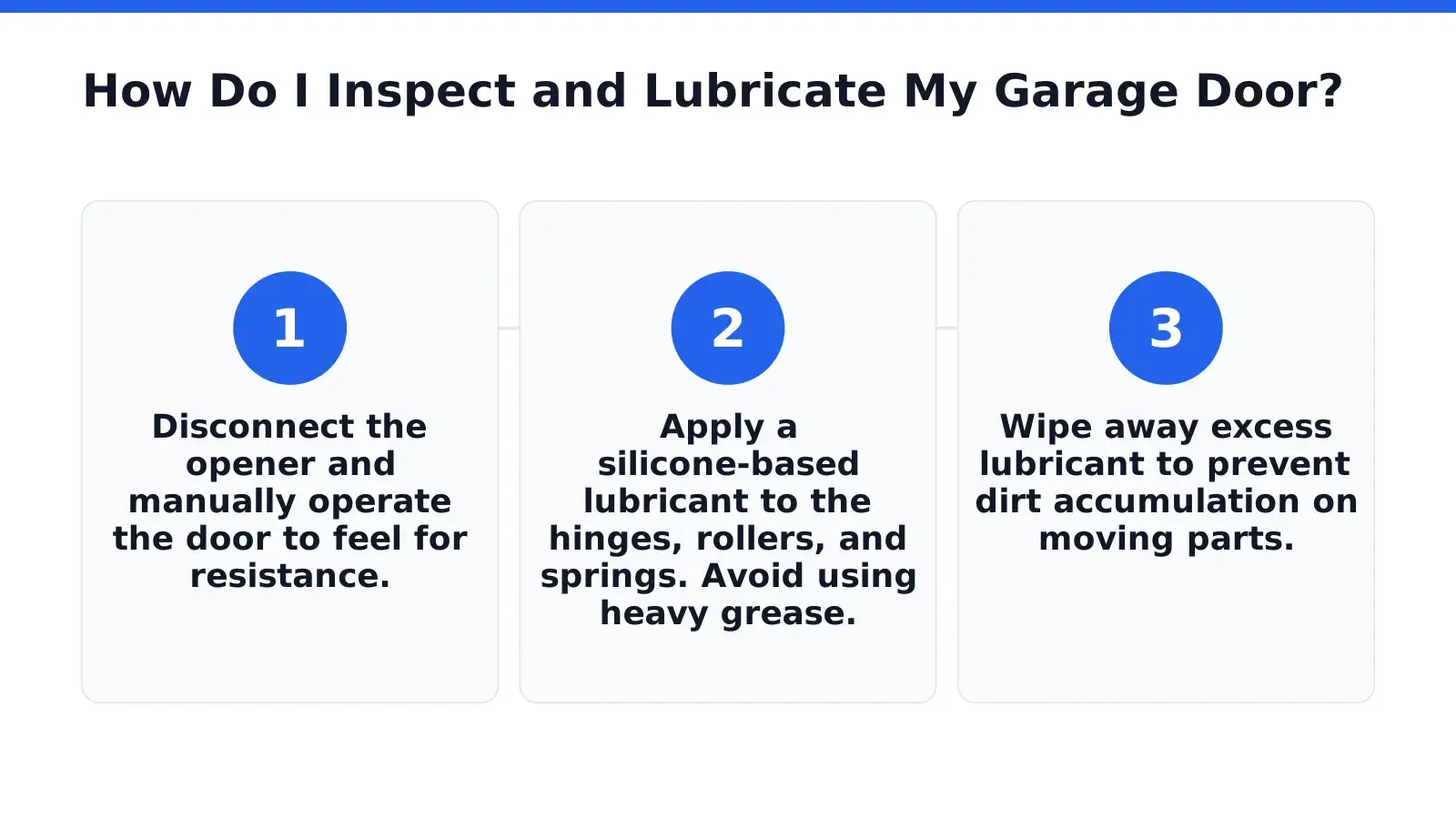
How Do I Inspect and Lubricate My Garage Door?
Effective inspection and lubrication begin with understanding the system. Homeowners should learn the basic components of the door system, including the distinction between the door itself and the garage door opener. This awareness makes it easier to notice when something is off. Strange noises, jerky movements, or misalignment signal developing problems. Identifying minor issues early prevents major repairs later.
What Are the Key Areas to Inspect Before Lubricating?
A thorough visual check precedes any lubrication work. Look for loose bolts, frayed cables, and worn rollers. Pay close attention to the weatherstripping along the bottom and sides. Damaged seals allow moisture and debris inside. The door’s alignment also requires verification. A door that appears crooked places uneven stress on its components.
How Should Lubrication Be Applied for Best Results?
Proper technique matters as much as the product used. Follow these steps for a safe and effective process:
Disconnect the opener and manually operate the door to feel for resistance.
Apply a silicone-based lubricant to the hinges, rollers, and springs. Avoid using heavy grease.
Wipe away excess lubricant to prevent dirt accumulation on moving parts.
Seasonal conditions dictate specific focus areas. In spring, technicians at Overhead Door Company of The Desert™ lubricate parts, inspect weatherstripping, and check alignment. Summer heat demands attention to expansion. Clean sensors and test the auto-reverse function during hotter months. Consistent care keeps the door operating smoothly year-round.
When Should I Call a Professional for Garage Door Service?
Professional garage door services in Palm Desert, CA, ensure doors remain safe, dependable, and efficient. A homeowner should contact a specialist the moment a door operates unevenly, emits grinding noises, or refuses to reverse on obstruction. Delaying that call risks a sudden spring failure. It also invites security gaps that compromise a property overnight.
Overhead Door Company of The Desert™ proudly provides dependable garage door services in Cathedral City, CA, for homeowners and businesses seeking reliable workmanship and long-lasting solutions. The company dispatches technicians who follow a strict diagnostic sequence.
What signs indicate a spring or cable is about to fail?
A visible gap in a torsion spring signals imminent breakage. Frayed cables and a door that slams shut when released demand immediate professional attention. Skilled technicians assess each system, address potential issues before they become major problems, and ensure doors operate smoothly in the desert climate.
How do professionals handle opener malfunctions differently?
A technician tests the logic board, safety sensors, and force settings in sequence. Intermittent operation often traces to a failing capacitor or stripped gear, not a simple remote battery. With more than 75 years of combined experience, the company’s IDEA Certified technicians deliver expert inspections, repairs, maintenance, and installations tailored to the needs of every property owner in the community.
The right professional garage door installers bring precision that prevents repeat failures. A misaligned track or unbalanced door wears out rollers and hinges prematurely. Professional calibration restores smooth cycling and extends the system’s service life.
FAQ
How often should I lubricate my garage door’s moving parts?
Lubricate springs, rollers, and hinges every three months using a silicone-based lubricant to prevent friction-related wear.
What safety feature should I test monthly?
Test the auto-reverse function monthly by placing a roll of paper towels under the closing door to ensure it reverses on obstruction.
Why do I need an annual professional inspection?
Annual professional inspections catch loose hardware, worn springs, and misaligned tracks before small problems escalate into complete system failures.
Conclusion
Following these maintenance steps and scheduling annual professional inspections prevents premature failure and keeps the door operating safely. Homeowners who commit to this routine protect their investment and avoid unexpected breakdowns. The next step is to schedule a professional inspection and begin the simple DIY tasks outlined above.