

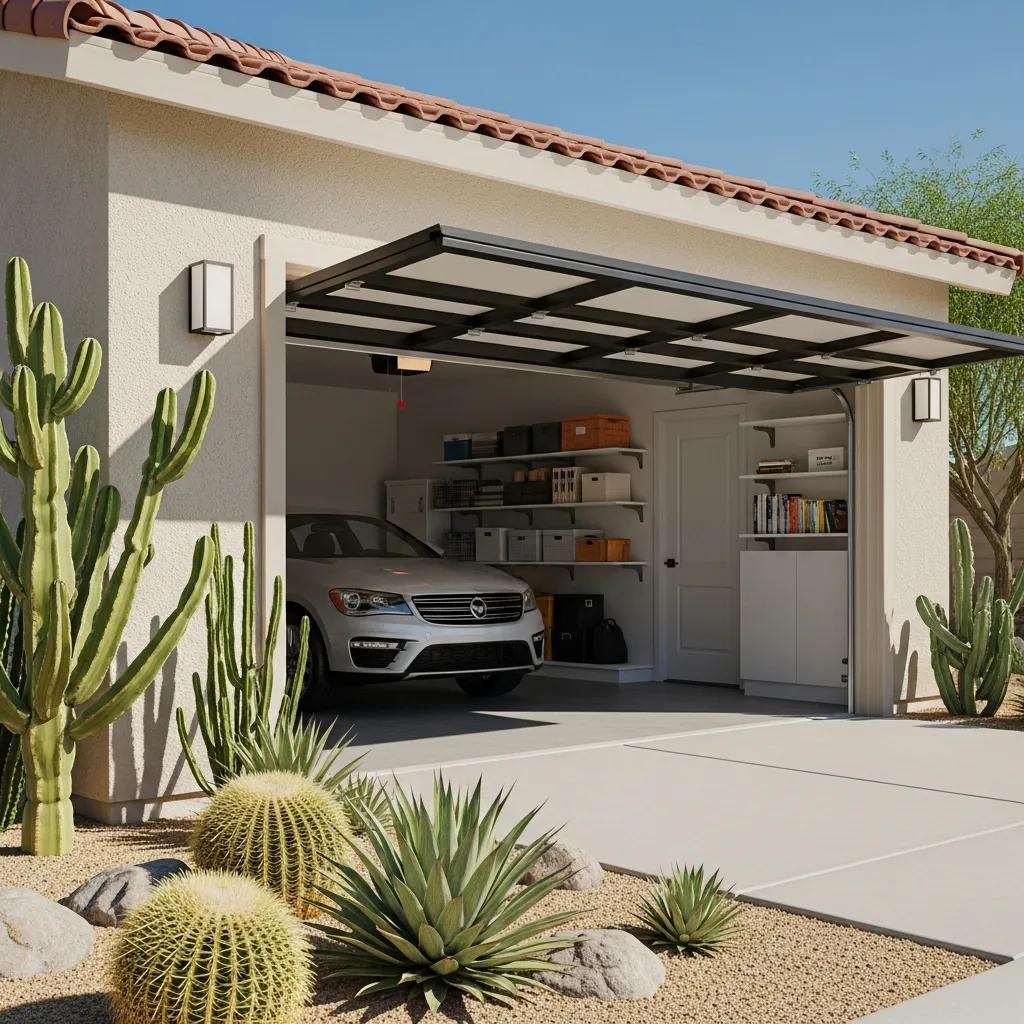
Ultimate Garage Door Buying Guide for Coachella Valley Residents: Choosing the Best Materials, Insulation, and Installation Options
This practical guide helps Coachella Valley homeowners choose garage doors built for desert heat, intense UV, and blowing sand. We cover which materials hold up best in the sun, how insulation and thermal breaks lower cooling loads, typical local installation costs and permit triggers, and the maintenance routine that keeps doors working longer in arid conditions. You’ll get clear guidance on selecting insulated doors for attached living spaces, comparing steel, fiberglass, and vinyl for hot climates, and budgeting for installation and permits in Palm Springs, Palm Desert, and Indio. We also explain when to call a certified technician and how local contractors can simplify pricing and permit paperwork. Start with material selection, then evaluate insulation and R-value, estimate installation costs and permits, and finish with a desert-specific maintenance checklist to protect your investment.
Selecting the Best Garage Doors for Coachella Valley Homes
In desert weather, pick materials that resist UV fading, tolerate high surface temperatures, shrug off sand abrasion, and work well with insulation or thermal breaks to keep adjacent living spaces comfortable. Look for doors that won’t warp or fade quickly and that accept high-R-value cores. The table below lays out common material trade-offs—durability, UV resistance, insulation options, cost, and maintenance—so you can compare practical choices for desert homes.
Quick material comparison for Coachella Valley homeowners:
| Material | Durability | UV Resistance | Insulation Options | Cost Range |
|---|---|---|---|---|
| Insulated Steel | High | Medium (coated finishes) | Polyurethane or polystyrene cores | $$-$$$ |
| Fiberglass | Medium | High (resists rot) | Limited panel cores; can be insulated | $-$$ |
| Vinyl | Medium | High (colorfast) | Thin foam cores available | $-$$ |
| Composite | Medium-High | High | Compatible with insulated cores | $$-$$$ |
| Wood (caveat) | Low-Medium | Poor (requires frequent refinishing) | Can be insulated but not ideal | $$-$$$ |
Overall, insulated steel and engineered composites usually strike the best balance of cost, insulation, and longevity in desert conditions. Below we focus on steel—its finishes and insulation pairings for high-heat performance.
How Do Steel Garage Doors Perform in Extreme Heat and UV Exposure?
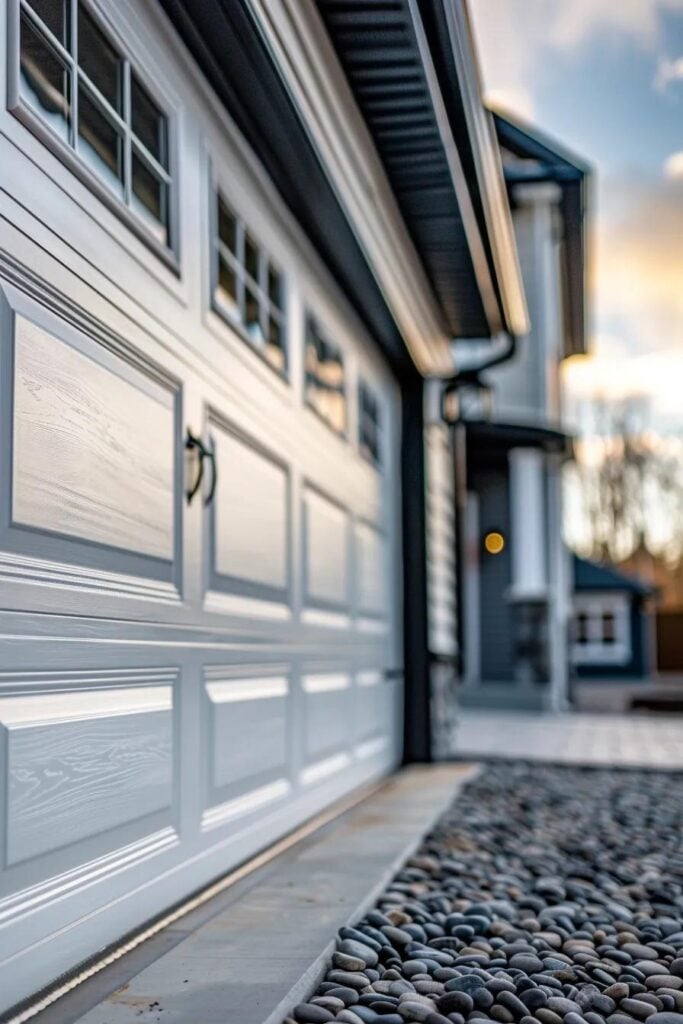
Steel doors hold up well in desert climates when finished with UV-stable coatings and combined with good insulation. Steel conducts heat, so a polyurethane core plus a reflective or UV-resistant finish helps limit heat transfer and reduce thermal expansion. Baked-on paints or powder coats retain color and resist dents, and thermal breaks at the frame cut down direct heat conduction into the house. For many Coachella Valley homes, a properly insulated steel door delivers the best mix of strength, cost-effectiveness, and R-value for protecting adjacent conditioned spaces.
What Are the Pros and Cons of Fiberglass and Vinyl Garage Doors in Desert Conditions?
Fiberglass and vinyl resist rot and won’t warp like wood—an advantage in dry, sunny climates. Fiberglass keeps color well and can mimic carriage styles while staying lightweight, though it can become brittle over very long UV exposure if not formulated with UV inhibitors. Vinyl is dent-resistant and holds its shape under heat, but thin vinyl panels may need foam cores to reach desirable R-values. Use fiberglass for low-maintenance style and vinyl for affordability and dent resistance; both work best when paired with proper insulation and UV-protective finishes.
Key trade-offs at a glance:
- Fiberglass — Pros: Good UV stability, low rot risk, lightweight.
- Fiberglass — Cons: Can become brittle over decades without UV inhibitors.
- Vinyl — Pros: Dent-resistant, colorfast, low maintenance.
- Vinyl — Cons: Thinner panels often need foam insulation to meet R-value goals.
Next: how insulation choices change energy performance for desert homes.
How Does Garage Door Insulation Impact Energy Efficiency in Desert Homes?
Insulation on the garage door affects heat flow into attached living areas and how hard your AC must work. In hot, sunny climates, higher R-values slow daytime heat gain and help stabilize temperatures in adjacent rooms, lowering HVAC runtime and cooling costs. The table below compares common insulation types by typical R-value, thermal break availability, noise reduction, and relative cost so you can weigh performance against budget.
| Insulation Type | Typical R-value | Thermal Break Availability | Noise Reduction | Cost |
|---|---|---|---|---|
| Polyurethane (injected) | R-10 to R-18+ | Often integrated | High | $$-$$$ |
| Polystyrene (expanded) | R-6 to R-10 | Sometimes available | Moderate | $-$$ |
| Non-insulated (single skin) | R-0 to R-2 | Not applicable | Low | $ |
Injected polyurethane usually gives the best R-per-inch and long-term thermal performance, while polystyrene is a cost-conscious option that still improves comfort. Practical insulation benefits include:
- Reduced Heat Gain: Higher R-values lower daytime heat transfer into adjacent rooms.
- Lower Cooling Costs: Insulation cuts HVAC run-time when living spaces sit next to the garage.
- Noise and Dust Control: Denser cores damp sound and reduce sand infiltration.
Next up: recommended R-values for Coachella Valley homes.
What R-Value Is Recommended for Garage Doors in the Coachella Valley?
For Coachella Valley conditions, aim for higher R-values to limit heat transfer into attached living spaces. Many contractors and energy studies recommend doors in the R-10 to R-18 range for noticeable cooling benefits. Higher R-values reduce peak temperature swings and can cut HVAC runtime when the garage connects to conditioned rooms; polyurethane cores deliver strong R-per-inch. The right R-value depends on how the garage is used, whether it adjoins living areas, and your budget—often the extra upfront cost pays back over time in lower cooling bills.
How Do Thermal Breaks and Polyurethane Insulation Save on Cooling Costs?
Thermal breaks stop direct heat conduction between exterior and interior metal parts, while polyurethane adds high R-value and panel stiffness. Thermal breaks are narrow insulating barriers in the frame that interrupt conductive pathways, reducing heat transfer even when exterior surfaces get hot. Injected polyurethane outperforms polystyrene for R-per-inch and also improves sound control and resistance to panel warping. Together, thermal breaks and polyurethane lower heat infiltration and can cut HVAC run-time during hot months—helping Coachella Valley homeowners stay cooler and spend less on energy.
What Are the Typical Garage Door Installation Costs and Permit Requirements in Coachella Valley?
Installation costs in the Coachella Valley vary with material, door size, insulation, hardware, opener choice, and any structural or windload upgrades. Transparent pricing helps you budget. Typical cost contributors include the door panels, insulation add-ons, windows, torsion springs, opener equipment, and labor for removal and fit. The table below outlines common cost factors and relative impact to help prioritize spending for durability and efficiency.
| Cost Factor | Range / Impact | Value |
|---|---|---|
| Door material | $ – $$$ | Major price driver (steel vs composite vs wood) |
| Insulation | Adds $100 – $400 | Raises R-value, reduces cooling costs |
| Size / custom features | Significant | Larger or custom panels increase labor and parts |
| Labor / complexity | Variable | Challenging installs add time and cost |
| Permits & inspections | Moderate | Required when openings change or structural work occurs |
Permits usually apply when you change structural openings, alter headers, or upgrade windload ratings; check local building departments in Palm Springs, Palm Desert, or Indio to confirm. Many contractors assist with permits and provide clear estimates to avoid surprises during replacement projects.
Budgeting tips:
- Estimate Material First: Pick material and insulation to define the main price band.
- Add Labor: Include removal, framing, and opener installation costs.
- Include Permits: Allow for permit fees and possible inspection timing.
If you want help, Overhead Door Company of The Desert™ offers transparent pricing and permit assistance to guide homeowners through approvals before installation.
How Do Material, Size, and Labor Affect Installation Pricing?
Material sets the base product cost and hardware needs; larger or custom openings add labor and may require heavier-duty tracks and springs. Bigger doors weigh more and often need stronger springs, reinforced frames, and extra labor for safe handling and alignment, which raises parts and install time. Complex projects—like switching door types or adding windload upgrades—can add carpentry, framing, and inspection coordination. Clear scope and material choices minimize surprises and help you prioritize things like higher R-value or a premium opener.
When Are Permits Required for Garage Door Replacement in the Desert Region?
Permits are generally required when work changes structural openings, alters headers or framing, increases windload ratings, or adds new electrical circuits for openers. Straight panel-for-panel replacements often don’t need full structural permits, but local rules vary. Confirm with your city or county building department—especially in Palm Springs, Palm Desert, and Indio—so you don’t run into delays. Contractors who handle permit filings can speed approvals and ensure compliance with local windload and safety codes, avoiding costly rework. If structural work is involved, factor inspection windows and permit timing into your schedule.
How Can Homeowners Maintain and Extend the Life of Garage Doors in Desert Conditions?
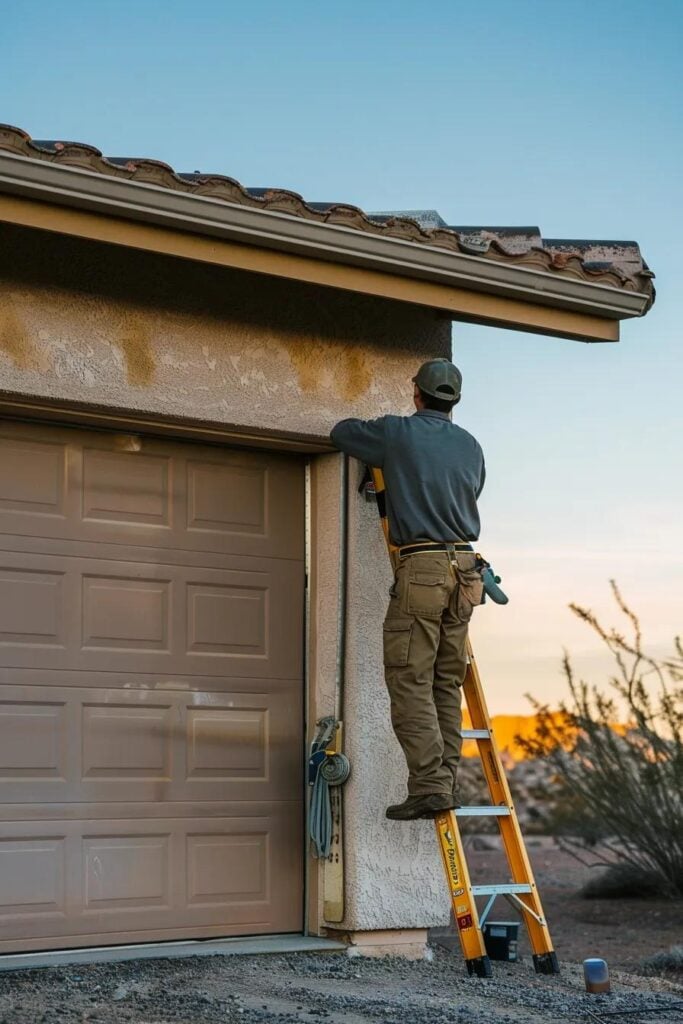
Simple, regular maintenance targeted at sand, UV, and heat will extend door life and reduce emergency repairs. A seasonal checklist keeps moving parts and finishes working reliably in harsh conditions. Clean abrasive sand from tracks, check weatherstripping for gaps, and use high-temperature-rated lubricants on rollers and hinges to prevent accelerated wear. The table below lists recommended actions, how often to do them, and the benefits so you can build an easy upkeep plan that protects insulation and mechanical parts.
| Maintenance Action | Frequency | Benefit |
|---|---|---|
| Clean tracks & seals | Monthly | Prevents sand abrasion and binding |
| Lubricate hardware | Every 6 months | Reduces wear from heat and friction |
| Inspect weatherstripping | Annually | Maintains thermal seal and dust exclusion |
| Finish touch-ups | Every 2-3 years | Protects against UV fading and corrosion |
Maintenance checklist for desert homes:
- Monthly: Remove sand and debris from tracks; sweep the bottom seal.
- Semiannual: Lubricate rollers, hinges, and springs with heat-rated lubricant.
- Annual: Check insulation, weatherstripping, and opener operation; schedule a professional tune-up if needed.
Overhead Door Company of The Desert™ provides maintenance plans, 24/7 emergency repair, and factory-trained, IDEA-certified technicians to handle inspections, emergency fixes, and scheduled upkeep—useful if you prefer professionals to keep your door optimized for Coachella Valley conditions. A pro inspection confirms seals, springs, and openers are set up correctly for desert demands.
What Maintenance Tips Protect Garage Doors from Sand, Heat, and UV Damage?
Protecting doors in the desert means keeping sand out, maintaining seals, and defending finishes from UV. Sweep and vacuum tracks and thresholds regularly to avoid abrasive wear on rollers and tracks. Replace weatherstripping when it compresses to keep conditioned air from escaping adjacent rooms. Use UV-resistant paints or finishes and plan touch-ups for painted surfaces to prevent premature fading and corrosion. Choose lubricants rated for high temperatures so they don’t break down in heat. These steps cut down on repairs and help insulated doors last longer in arid climates.
Why Choose Overhead Door Company of The Desert™ for Local Installation and Service?
Overhead Door Company of The Desert™ is a family-owned, locally operated team serving Palm Springs, Palm Desert, and Indio. We focus on long-term customer relationships and clear pricing. Our technicians are factory-trained and IDEA-certified, and we’ve completed thousands of local projects. We use a no-pressure sales approach, accept multiple payment options, and offer 24/7 emergency service so you can get prompt repairs and routine maintenance. If you want local expertise plus help with permits and transparent cost estimates, request a quote or schedule a service appointment with our team.
Frequently Asked Questions
What are the signs that my garage door needs repair?
Watch for loud or unusual noises, slow or jerky movement, visible wear on springs or cables, or a door that won’t open or close fully. Misalignment or binding are also warning signs. Regular inspections catch issues early and prevent bigger, more expensive problems. If you see any of these symptoms, contact a certified technician for a thorough check.
How often should I perform maintenance on my garage door?
Keep a simple schedule: clear tracks and seals monthly, lubricate moving parts every six months, and inspect weatherstripping and insulation annually. Sticking to this routine helps the door operate smoothly and extends its life—especially important in desert conditions where sand and heat add wear.
Can I install a garage door myself, or should I hire a professional?
Some homeowners can handle basic installs, but professional installation is usually the safer, smarter option—particularly for complex jobs. Pros have the right tools, training, and knowledge to ensure safe setup, code compliance, and warranty coverage. They can also manage permits and electrical work. If you’re not experienced with garage-door systems, hire a certified technician to avoid safety risks and costly mistakes.
What should I consider when choosing a garage door opener?
Consider drive type (chain, belt, or screw), lifting power, noise level, and safety features. Belt drives are quiet and ideal for attached garages; chain drives are rugged and cost-effective. Look for smart controls for remote access, battery backup for outages, and safety sensors to prevent accidents. Match the opener to your door’s weight and your household’s noise tolerance for the best result.
How can I improve the energy efficiency of my garage door?
Choose a door with a high R-value—polyurethane cores offer strong thermal performance—seal gaps with quality weatherstripping, and consider thermal breaks to reduce conductive heat flow. Regular maintenance (cleaning, lubricating, replacing seals) also helps. These steps keep adjacent living spaces more comfortable and lower cooling costs.
What are the benefits of insulated garage doors?
Insulated doors reduce heat gain, stabilize indoor temperatures, lower cooling costs, and provide sound dampening. They also resist warping from temperature swings and generally last longer. In a hot desert climate, an insulated door improves comfort and can save money over time.
What are the local building codes for garage door installation in Coachella Valley?
Local codes usually require permits for structural changes, new openings, or upgrades that affect windload ratings. Requirements vary by city, so check with building departments in Palm Springs, Palm Desert, or Indio for specifics. Following codes ensures safety and avoids rework—many contractors offer permit assistance to simplify the process.
Conclusion
Picking the right garage door for a Coachella Valley home improves comfort, efficiency, and durability in harsh desert conditions. Knowing how materials, insulation, and professional installation work together helps you protect your investment. Regular maintenance keeps doors operating well for years. For tailored advice and expert installation, contact Overhead Door Company of The Desert™—we’ll help you choose the right door and handle the details from permits to final tune-up.