

Traditional vs Modern Garage Doors: Comprehensive Guide to Choosing the Right Style and Material
Selecting a garage door is a consequential decision for homeowners because it affects both the visual character and operational performance of a property. This guide examines the distinguishing characteristics, materials, and advantages of traditional and modern garage doors. It compares options for desert climates, installation costs, energy performance, security features, and customization. The objective is to enable an informed selection that aligns with both aesthetic objectives and functional requirements.
To understand the progression from early designs to current solutions, consider the historical evolution of the garage.
History of Garage Doors: Evolution & Trends
Part one of this work provides a history of the garage in America from 1890 to 1952, with emphasis on the technological and social trends that influenced its development.
The garage: its history and preservation, 2002
Comparing Traditional and Modern Garage Door Designs
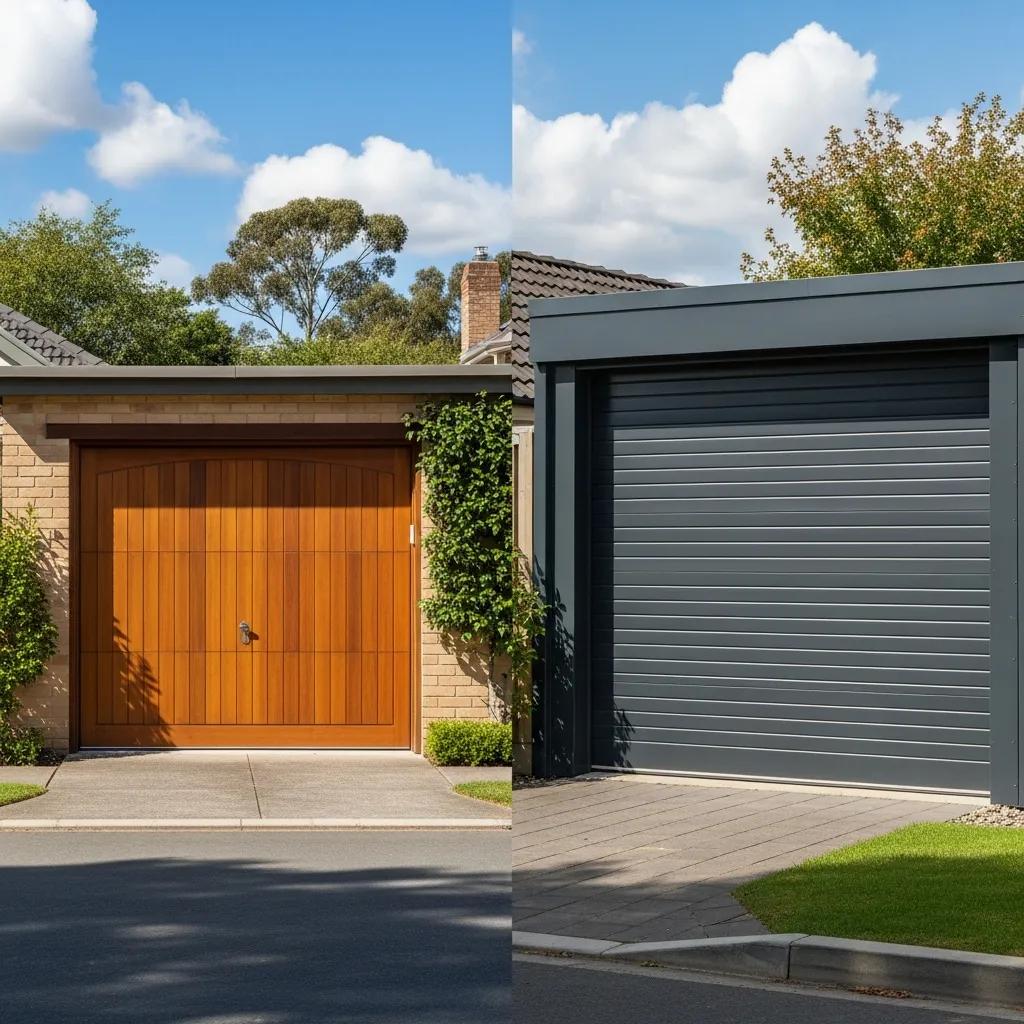
Traditional garage doors are defined by classic aesthetics and frequently employ wood construction and detailed workmanship to enhance curb appeal. Modern garage doors prioritize clean lines, minimal ornamentation, and materials such as steel, aluminum, and glass; they often integrate smart systems to deliver both functionality and contemporary appearance.
How Do Traditional Garage Doors Reflect Classic Aesthetics and Materials?
Traditional garage doors commonly use wood, which provides durability and permits detailed craftsmanship. Styles such as carriage-house designs include raised panels and decorative hardware. The natural appearance of wood complements traditional architectural forms.
What Characteristics Define Modern Garage Doors and Their Design Innovations?
Modern garage doors employ materials such as steel, aluminum, and glass to achieve a contemporary appearance while maintaining structural integrity. They may include substantial glazing for natural light and integrate smart technology for improved security and convenience. Design developments emphasize energy efficiency and reduced maintenance requirements.
Which Garage Door Materials Offer Optimal Durability and Suitability for Desert Climates?
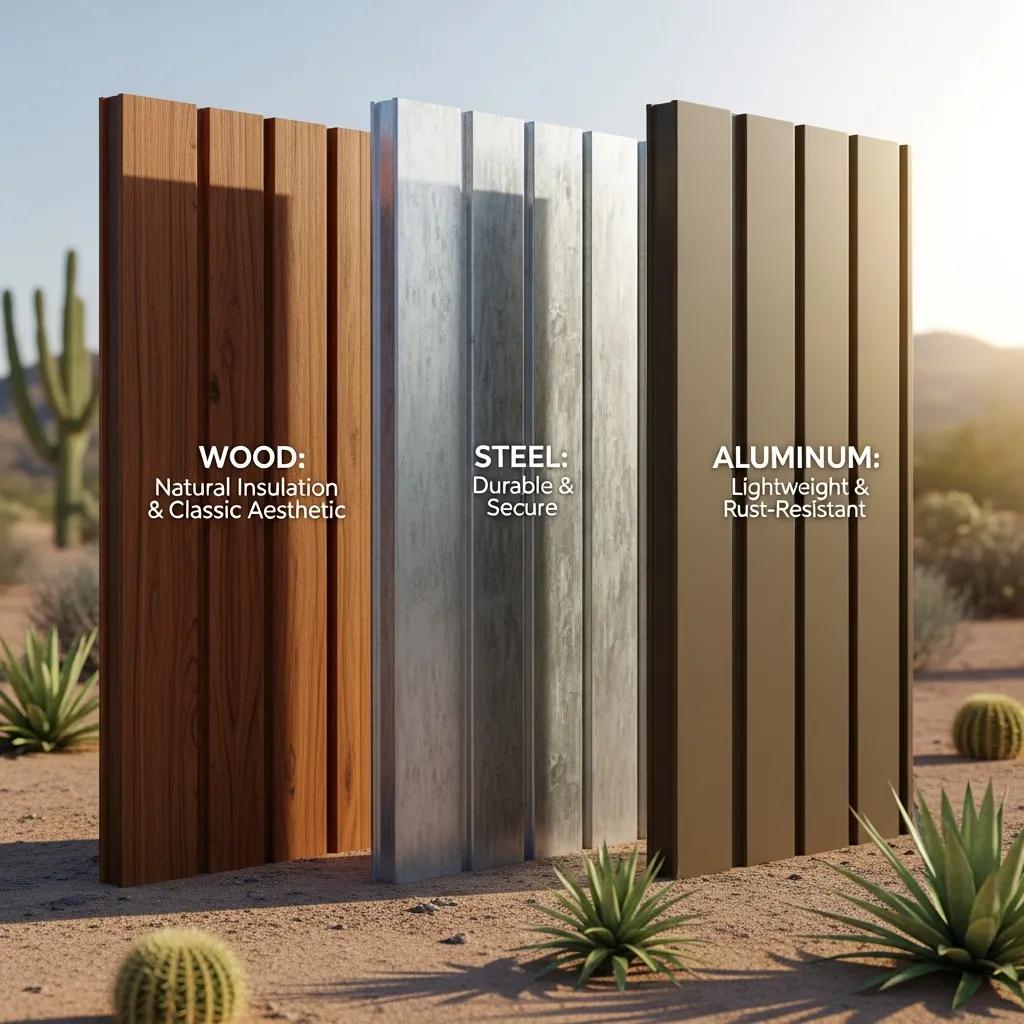
In desert climates, durability and thermal performance are primary considerations. Intense solar exposure and wide temperature swings can affect service life and operational performance. Steel and aluminum are frequently recommended for their resistance to warping, fading, and corrosion; wood may be used if it is properly treated and sealed.
The table compares material durability and suitability and underscores the importance of selecting an option that aligns with local environmental conditions.
What Are the Benefits and Drawbacks of Wood, Steel, and Aluminum Garage Doors?
Each material presents specific advantages and limitations that can influence the choice based on personal preferences and functional needs.
Wood Garage Doors:
- Benefits: Wood offers unmatched aesthetic appeal, providing a warm, natural look that complements traditional home styles. It allows extensive customization in terms of designs, stains, and finishes, enabling homeowners to achieve a unique and elegant appearance.
- Drawbacks: Wood requires consistent maintenance including sealing, painting, or staining to protect against rot, warping, insect damage, and weathering. In harsh climates, neglecting regular upkeep can significantly reduce the door’s lifespan.
Steel Garage Doors:
- Benefits: Steel doors boast high durability and excellent security, resisting impact and providing strong protection. They require less maintenance compared to wood and can be insulated for improved energy efficiency. Steel’s smooth finish is suitable for modern aesthetics and is available in various colors.
- Drawbacks: Steel panels may dent easily if impacted. If the protective coating is compromised and not repaired promptly, rust can develop, particularly in humid environments.
Aluminum Garage Doors:
- Benefits: Aluminum is lightweight, naturally resistant to rust, and ideal for climate conditions prone to corrosion. It is often used in designs incorporating glass or contemporary styling. Aluminum doors are easy to operate and require minimal maintenance.
- Drawbacks: Aluminum generally offers less insulation than steel options and can be more prone to dents and bends, which may affect appearance over time.
Awareness of these trade-offs enables homeowners to select materials that best meet their performance, aesthetic, and maintenance expectations.
How Do Material Choices Impact Energy Efficiency and Maintenance Requirements?
Material selection affects thermal performance and ongoing maintenance obligations. Insulated doors, particularly steel or aluminum units with polyurethane or polystyrene cores, assist in regulating internal temperatures and can reduce energy consumption. Low-maintenance materials such as steel and aluminum reduce the frequency of upkeep.
- Insulation Benefits : Insulated doors help maintain a stable temperature, which is crucial in extreme climates.
- Long-term Maintenance Considerations : Choosing low-maintenance materials can save time and money in the long run.
How Do Installation Costs and Maintenance Considerations Differ Between Traditional and Modern Garage Doors?
Installation costs vary according to door type and material. Traditional wooden doors often require more labor due to weight and installation complexity, whereas modern steel or aluminum doors may install with reduced labor requirements, which can lower overall installation costs.
What Factors Influence Garage Door Installation Pricing?
Several factors influence installation pricing.
- Material Costs : The type of material selected can greatly affect the overall price.
- Labor Complexity : More intricate designs or heavier materials may require additional labor.
What Are Essential Maintenance Tips for Prolonging Garage Door Lifespan?
To prolong the service life of a garage door, implement the following maintenance practices:
- Regular Lubrication : Keep moving parts lubricated to prevent wear and tear.
- Cleaning : Regularly clean the door to remove dirt and debris that can cause damage.
- Professional Inspections : Schedule annual inspections to catch potential issues early.
What Energy Efficiency and Security Features Should Be Considered When Selecting a Garage Door?
Energy efficiency and security are primary considerations when selecting a garage door. Modern doors frequently include advanced insulation and smart controls to improve both energy performance and security posture.
How Do Modern Garage Doors Incorporate Insulation and Smart Automation?
Modern doors commonly incorporate insulation to support thermal control, which is critical in extreme climates. Smart automation enables remote operation via mobile applications or integration with home automation systems, thereby enhancing convenience and security.
What Security Enhancements Are Available for Both Traditional and Modern Doors?
Both traditional and modern doors can be outfitted with security enhancements, including the following.
- Smart Access Controls : Allowing remote access and monitoring.
- Reinforced Construction : Providing additional strength against forced entry.
How Can Customization and Style Trends Influence Your Garage Door Selection?
Customization is a significant factor in garage door selection, as it permits alignment with personal style and the architectural context of the residence.
What Customization Options Are Available for Traditional Garage Doors?
Traditional doors permit customization in areas such as:
- Color Choices : A wide range of paint and stain options to match home exteriors.
- Panel Designs : Different panel styles to enhance visual appeal.
How Do Modern Garage Doors Adapt to Contemporary Style and Functional Trends?
Modern doors are engineered to reflect current style and functional trends and may incorporate:
- Materials Used : Innovative materials that offer both style and functionality.
- Technology Integration : Smart features that enhance usability and security.
This guide summarises the essential considerations for selecting between traditional and modern garage doors. A clear understanding of features, materials, costs, and customization supports informed decisions that improve both aesthetic and functional outcomes.
For a comprehensive selection, review the available residential garage doors to identify models that meet your requirements.
Frequently Asked Questions
What are the key differences in maintenance requirements between traditional and modern garage doors?
Maintenance obligations differ between traditional and modern doors. Traditional wooden doors typically require periodic painting or staining to prevent rot and warping. Modern steel or aluminum doors are designed for low maintenance and generally require only occasional cleaning and lubrication. Prospective purchasers should assess their willingness to perform regular maintenance when selecting a style.
How do garage door styles affect home resale value?
Garage door style can influence resale value. Traditional doors appeal to buyers seeking classic aesthetics and can enhance curb appeal. Modern doors with contemporary design and smart features attract buyers seeking up-to-date systems. Investment in a high-quality door that complements the property can yield a favourable return on investment at resale.
What are the most popular colors for garage doors in current trends?
Current trends favour both neutral and bold colour palettes. Common selections include white, gray, and black for a timeless appearance; some homeowners choose navy blue, deep green, or red for a stronger visual statement. The choice of colour should complement the home’s exterior and consider neighbourhood aesthetics.
Are there energy-efficient options available for traditional garage doors?
Energy-efficient options are available for traditional doors. Insulated wooden doors with polyurethane or polystyrene cores can improve thermal performance. Weatherstripping and correct sealing further enhance energy efficiency. Although traditional doors may require greater maintenance, modern insulation technology has improved their viability for energy-conscious homeowners.
What smart technology features are available for garage doors?
Smart technology features are increasingly common for garage doors. Many modern systems include smart openers that permit remote operation via mobile applications. Capabilities may include real-time notifications, remote access, and integration with home automation platforms. Certain systems also offer video monitoring and advanced security functions.
How can I ensure my garage door is secure against break-ins?
To improve garage door security, adopt several measures: install doors with reinforced construction and robust locking mechanisms; deploy smart access controls for remote monitoring and alerts; ensure windows use shatter-resistant glass or security film; and perform regular maintenance inspections to identify and remediate vulnerabilities.
What are the environmental impacts of different garage door materials?
Environmental impacts vary by material. Wood production consumes significant resources and can contribute to deforestation if sourcing is not managed sustainably. Steel and aluminum are commonly recyclable, which can reduce lifecycle environmental impact. Energy-efficient door options also reduce operational energy consumption. Homeowners should evaluate material lifecycle and sustainability when making a selection.
Conclusion
Selecting an appropriate garage door can enhance both the aesthetic and functional qualities of a property. A thorough understanding of materials, costs, and maintenance obligations enables informed decisions that align with operational needs and design objectives. Review available product options to identify the solution that best meets your requirements and improves curb appeal in a measured manner.