

Emergency Garage Door Spring Replacement — How to Spot It, What It Costs, and Our 24/7 Repair Service
A garage door spring can fail without warning — a loud snap, a door that won’t budge, or a unit stuck half-open. Those moments create real safety and security risks and usually need immediate attention. This guide walks you through the clear signs of a broken spring, which spring types tend to fail suddenly, why calling a professional emergency repair matters, and what to expect for emergency replacement costs in 2026. You’ll get straightforward diagnostic cues, short safety steps you can take right away, an easy comparison of torsion vs. extension springs, and the pricing factors that affect emergency service. We also explain local emergency options and what certified technicians do to return your door to safe operation. Read on to recognize urgent signs, understand repair priority by spring type, learn why DIY is dangerous, and see realistic 2026 cost ranges so you can decide quickly and confidently.
What Are the Signs of a Broken Garage Door Spring?
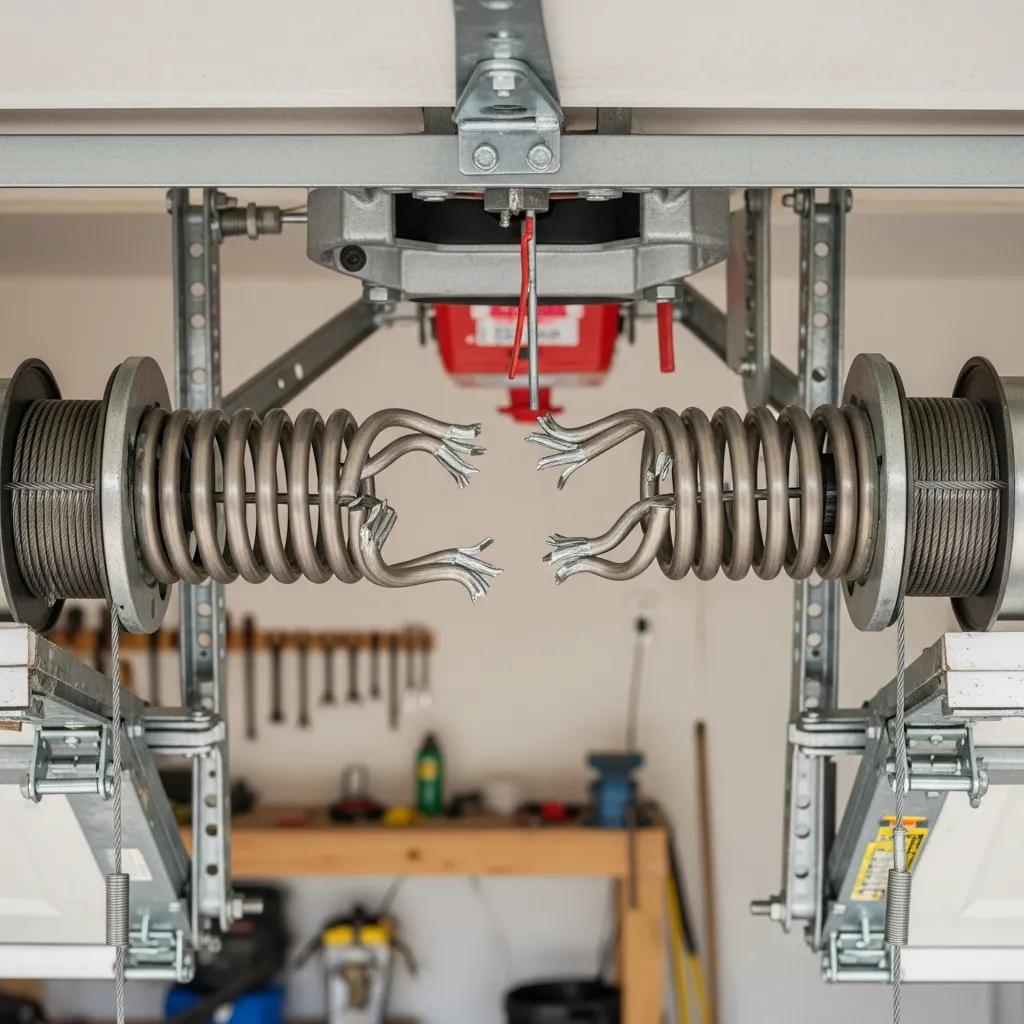
Broken garage door springs usually show themselves through a mix of sounds, visible damage, and operational problems. The most obvious clue is a sudden, sharp snap followed by a door that feels much heavier or won’t move. Look for a visible gap in the coil, a separated spring, misaligned drums, or loose or dangling cables — all signs the door has lost balance and the opener is under strain. Operational red flags include a door that refuses to open, moves unevenly, drops abruptly, or an opener that runs but can’t lift the door. If you notice more than one of these signs, stop using the door, clear people and vehicles away from the area, and call a professional emergency service to handle safe removal and replacement.
The table below links common symptoms to urgency and the immediate actions to take so you can triage the situation quickly.
| Symptom | Urgency Level | Recommended Immediate Action |
|---|---|---|
| Loud snap or bang | High | Don’t touch the door; clear and secure the area |
| Visible gap or separated spring | High | Stop using the door; treat it as unsafe until repaired |
| Door heavy or won’t open | High | Don’t try to lift it manually; call an emergency technician |
| Opener runs but door doesn’t move | Medium-High | Disconnect the opener and keep children away until a tech arrives |
These cues help you prioritize safety and avoid DIY attempts that can make things worse or cause injury. If the situation looks hazardous, a certified technician can safely evaluate and secure the door.
How Can Audible and Visual Cues Indicate Spring Failure?
A loud snap usually means a spring released stored tension suddenly — that energy can fling parts or shift the door’s balance. Hearing that sound should be a trigger to clear the area, avoid touching the door, and check (from a safe distance) for a gap in the coils or a separated spring. Visual signs such as a crooked door, loose cables, or drums out of alignment point to uneven tension and possible secondary damage to the opener or track. Take photos from a safe spot if you can — those images help technicians prepare the right parts and tools before they arrive.
Documenting what you hear and see speeds diagnosis and helps technicians decide whether replacing both springs is the safest long-term fix.
What Operational Issues Signal the Need for Emergency Spring Replacement?
If the door is extremely heavy to lift, drops suddenly, or jerks during travel, the springs have likely lost function and present an immediate risk. When the electric opener runs but can’t lift the door, the springs aren’t counterbalancing the load and the opener can overheat or fail, complicating repairs. Strange noises from the opener or sudden changes in how far the door travels are additional warning signs. In these cases, disconnect the opener for safety, secure the area, and arrange emergency service to avoid a collapse or injury.
Quick professional intervention prevents further damage to cables, drums, and the opener, and usually lowers total repair costs by addressing the root problem right away.
Which Types of Garage Door Springs Require Emergency Replacement?
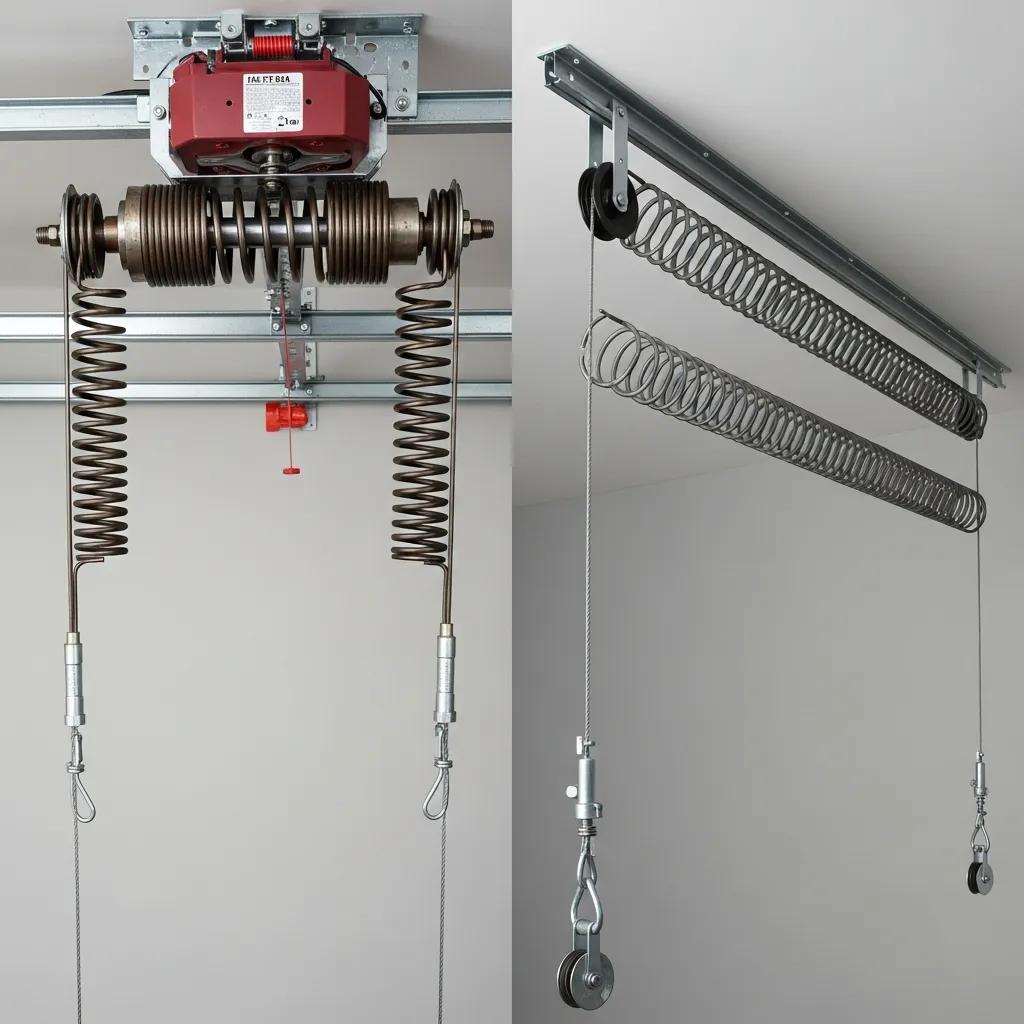
There are two main spring systems: torsion and extension. Failures in either can become urgent and need immediate replacement. Torsion springs sit above the door on a shaft and store rotational energy — when they break the release is sudden and often leaves the door unusable. Extension springs run along the track and stretch to help lift the door; a snapped extension spring can recoil and create imbalance. Both types can fail without warning, but torsion spring breaks are often higher risk because they store concentrated torque.
Below is a quick comparison showing where each spring type sits, how the tension behaves, and the safety risk if it fails.
| Spring Type | Where Installed | Tension Behavior | Safety Risk |
|---|---|---|---|
| Torsion spring | Above the door on a torsion shaft | Stores torque; releases suddenly when broken | High — abrupt release of energy |
| Extension spring | Along the track above rollers | Stretches along the track; can recoil on break | High — risk of outward snap |
| Dual/paired springs | Two springs used together for balance | Shared load lowers stress per spring | Moderate — often smart to replace both together |
When one spring fails, technicians commonly recommend replacing the paired spring to restore balance and reduce the chance of another emergency.
What Are the Differences Between Torsion and Extension Springs?
Torsion springs rotate on a shaft and provide smooth counterbalance for heavier or wider doors. They generally offer longer cycle life but require specialized tools and skill to wind and replace safely.
Extension springs stretch along the track and are common on lighter or single-car doors. They’re more accessible but still dangerous if they fail because of recoil risk.
The lifespan difference depends on cycle count and door weight — torsion assemblies often last longer per spring but cost more to replace. Understanding these mechanical differences explains why technicians select certain parts and why emergency responses vary by spring type.
Replacing the right spring type and swapping paired components when needed improves longevity and reduces repeat emergency calls.
How Does Spring Type Affect Repair Urgency and Process?
Urgency is highest when a spring has fully failed or the opener is overworking, since either situation risks a collapse or further mechanical damage.
Torsion spring replacement requires calibrated winding bars, exact torque adjustments, and careful balancing — work that takes time and trained technicians. Extension spring repair focuses on safe containment and replacement, but failures often come with damaged cables or pulleys that need inspection. Both repairs include post-replacement testing to confirm smooth travel, proper opener sync, and secure hardware.
Knowing these process differences helps homeowners understand why professionals follow careful safety steps rather than quick fixes.
Why Is Professional Emergency Garage Door Spring Repair Essential?
Springs store a lot of energy. Mishandling them can cause severe injury or property damage. Professional emergency repair matters because trained technicians have the right tools, procedures, and testing methods to remove broken springs safely, install the correct replacements, and rebalance the door so the opener isn’t overloaded.
Certified techs check for related damage — cables, drums, rollers, and the opener — and address those issues during the emergency visit to prevent repeat failures.
Proper repairs reduce liability, cut the chance of follow-up calls, and restore safe operation for people and vehicles.
Using a professional also helps preserve warranties and ensures product-specific installation requirements are met.
Overhead Door Company of The Desert™ employs IDEA Certified, factory-trained technicians and provides local 24/7 emergency service; contacting a certified local provider gets you a faster, safer response and dependable workmanship when the situation is urgent.
What Are the Safety Risks of DIY Spring Replacement?
DIY replacement puts homeowners at serious risk: stored spring energy can hurl tools or parts, incorrect winding can cause catastrophic failure, and wrong parts or improper installation can overload the opener or damage tracks and cables. Without specialized tools and experience, DIY attempts often strip hardware, mis-torque springs, or lead to repeat failures that cost more. DIY work can also void warranties or increase liability if someone is hurt. For these reasons, secure the area and call a professional instead of attempting spring repair yourself.
Understanding these dangers is why emergency procedures focus on containment and professional evaluation rather than temporary homeowner fixes.
How Do IDEA Certified Technicians Ensure Safe and Reliable Repairs?
IDEA Certified technicians follow standardized training for safe spring removal, correct spring selection, precise winding and torque settings, and thorough post-repair testing such as balance checks and opener synchronization.
They inspect connected parts — cables, drums, rollers, and tracks — for hidden damage and replace or adjust components as needed to restore reliable operation.
Technicians use documented safety checklists, personal protective equipment, and containment methods to protect people and property during emergency work.
This methodical approach reduces return visits and ensures emergency replacement addresses both the immediate hazard and any underlying issues.
Hiring certified technicians speeds repair time, lowers follow-up problems, and provides documented safety checks for your records.
How Much Does Emergency Garage Door Spring Replacement Cost?
Emergency replacement pricing depends on spring type, door size and weight, accessibility, any additional damaged components, and emergency call-out fees. Industry ranges for 2026 give you a practical planning guide: roughly $150–$350 for extension springs and $200–$450 for torsion springs, with after-hours emergency premiums possible. Labor time varies by job — simple swaps may take under an hour, while torsion systems with balance adjustments or dual-spring replacements require more time and calibration. Transparent pricing helps you weigh urgency versus cost and decide whether to replace both springs to restore balance and longevity.
The table below compares cost ranges, expected lifespan, and typical labor time for each spring type to help with budgeting and decisions.
| Spring Type | Average Cost (2026) | Typical Lifespan (cycles/years) | Typical Labor Time |
|---|---|---|---|
| Extension | $150–$350 | 5–10 years depending on cycles | 0.5–1 hour |
| Torsion | $200–$450 | 7–15 years depending on cycles | 1–2 hours |
| Dual replacement | $350–$700 | Restores balance; extends system life | 1–3 hours |
This side-by-side view explains why replacing both springs when one fails can be a cost-effective decision over time by preventing imbalance and premature wear.
What Factors Influence Garage Door Spring Repair Pricing?
Final cost varies with spring type and size, door weight and width, whether one or both springs are replaced, technician travel time and accessibility, emergency or after-hours fees, and any additional damaged parts like cables, drums, or opener components.
Sharing photos and clear symptom descriptions ahead of a call helps technicians give accurate estimates faster.
Investing in higher-quality springs and professional balancing raises upfront cost but lowers long-term maintenance and emergency risk.
Having door measurements, photos of visible damage, and a short list of symptoms ready speeds up accurate emergency quoting.
Why Is Transparent Pricing Important for Emergency Services?
Transparent, itemized pricing removes uncertainty during urgent decisions by clearly separating parts, labor, and emergency fees so you can compare options such as single-spring versus paired replacement.
Clear estimates build trust and let customers authorize necessary repairs quickly without surprise charges.
For emergency work, expect a concise verbal estimate up front and an itemized invoice after the job; asking for both helps manage expectations and speeds authorization.
Overhead Door Company of The Desert™ offers local emergency service and emphasizes safety, precision, and clear pricing so homeowners can make informed choices when a spring fails.
Frequently Asked Questions
What should I do immediately after a garage door spring breaks?
Put safety first: keep people and vehicles away from the door and don’t try to open or close it. Secure the area and call a professional emergency service right away. If you can safely take photos of visible damage, those images will help the technician prepare before arrival.
How can I tell if my garage door springs are nearing the end of their lifespan?
Watch for unusual noises, difficulty opening or closing the door, visible rust, or gaps in the coils. If the door feels heavy or unbalanced, the springs may be losing tension. Regular maintenance checks can catch these signs early so you can replace springs before a sudden failure.
Are there any warranties available for garage door spring replacements?
Many spring replacements include warranties for parts and labor, but coverage varies by manufacturer and service provider. Always ask about warranty length and terms before the repair so you know what’s covered and can keep the paperwork for your records.
What are the risks of ignoring a broken garage door spring?
Ignoring a broken spring risks injury from a falling door, further damage to the door system, and higher repair costs. A damaged spring can make the door operate unpredictably and strain other components like the opener and cables. Address spring issues promptly to protect safety and avoid larger repairs.
How often should garage door springs be inspected or replaced?
Have springs inspected at least once a year as part of regular maintenance. If you notice noise, difficulty operating the door, or visible wear, get them checked immediately. Torsion springs typically last 7–15 years and extension springs 5–10 years, depending on usage; higher-use doors may need more frequent inspections.
Can I replace garage door springs myself, or should I hire a professional?
DIY spring replacement is not recommended. Springs hold dangerous tension and require special tools and training to handle safely. Hiring a certified technician protects you from injury, prevents damage to the door, and helps avoid voiding warranties.
What should I look for when choosing a garage door repair service?
Choose a company with certified technicians, solid experience, transparent pricing, and good customer reviews. IDEA certification and factory training are reliable indicators of safety and quality. Also check for emergency availability and warranty options before hiring.
Conclusion
Knowing the signs of a broken garage door spring and why professional repair matters keeps your family and property safe. When you spot warning cues, prioritize containment and call certified technicians to fix the problem correctly the first time. Don’t wait for a small issue to become a danger — contact a local emergency spring repair service to address spring problems promptly. Explore our expert services to keep your garage door working safely and reliably.